|
Updated: September 07, 2003
|
|
|
|
The Daintree
Sixty-five million years ago this continent was covered in rainforest. Climate change has dried Australia out, shrinking the rainforest to refuges from drought and fire.
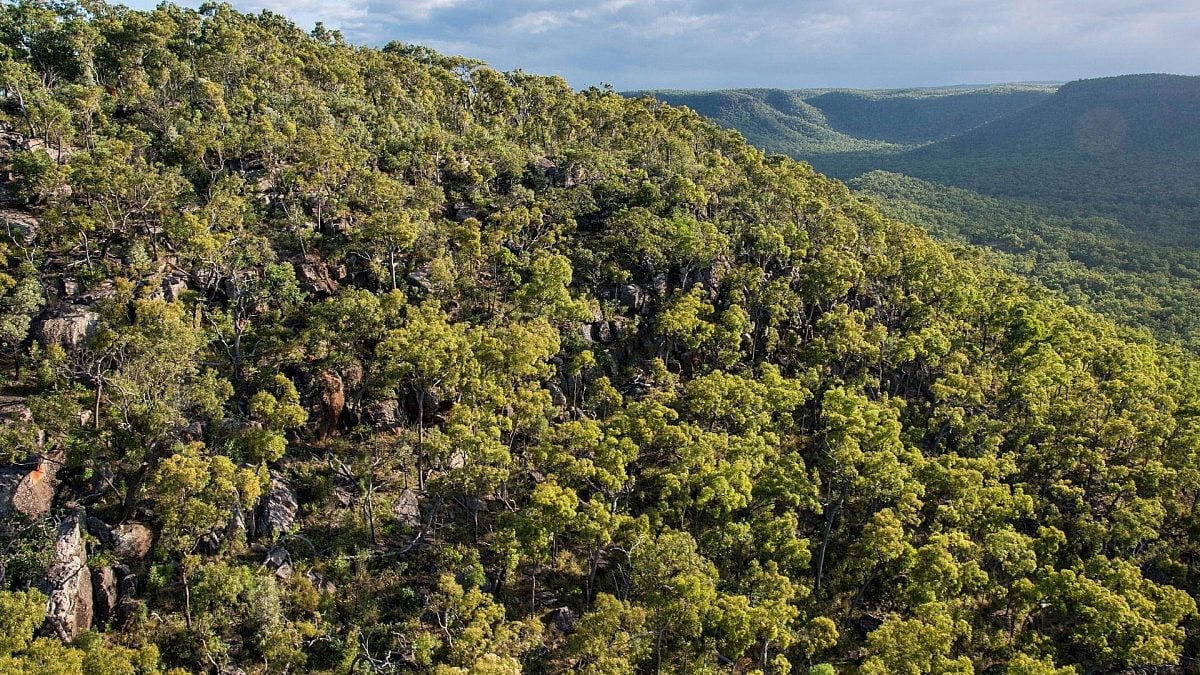
The wet tropics is the largest and most diverse refuge of ancient plant families in Australia. Yet by the 1980s this last refuge faced a final retreat. The narrow coastal plain and the Atherton Tableland inland had been cleared to fragments, leaving 8,000 square kilometres of rugged crown land in north Queensland still covered in primeval forest. This area was large enough to contain true wilderness, but governments had plans to exploit this last frontier and split tenure across forestry, defence and small National Parks.
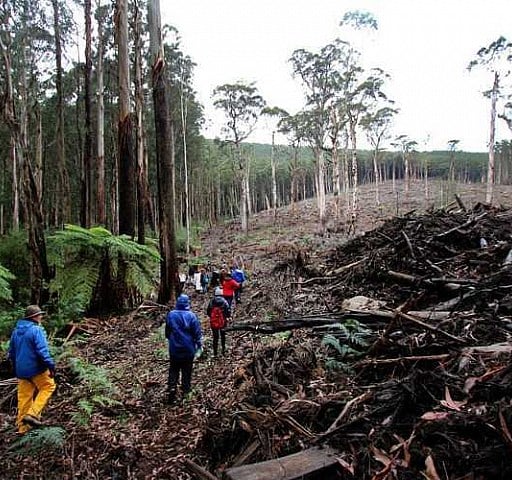
Pressure for real estate and tourist development, clearing for coffee or sugar cane, mining, dams and logging threatened the rainforest from its accessible edges to the remote wilderness valleys and plateaus.
Local conservationists, spread out along 500 kilometres of coastline, campaigned to protect their forest areas. New logging roads into virgin forest on Mount Windsor Tableland brought public outcry and protesters, developer George Quaid freeholded lowland forest and cut it up for real estate and in 1983 the Douglas Shire Council commenced work on the Daintree road.
Protests in 1983 and 1984 made Daintree a household word in Australia and raised concerns around the world.
The Wilderness Society had exploded out of Tasmania on a wave of popular sentiment that saved a wild river from an unnecessary dam. The Society's Australia-wide membership was aware of threats to wilderness across the continent but it was the urgent call for help from the Daintree that led to a mission to Brisbane.
Ex-Franklin campaigner Paul Dimmick arrived in Brisbane in May 1984 to a demobilised but receptive local membership of The Wilderness Society. Within a month volunteer staff opened a campaign office.
The Wilderness Society's philosophy of social change, together with a healthy dose of pragmatism, attracted scores of young idealists. The drive to protect the wet tropics had been stonewalled locally and actively opposed at the State level. This was the era of Joh Bjelke-Petersen's rule in Queensland and rainforest in north Queensland was a frontier for State development. "Not one more square inch of Queensland will go on the World Heritage list" declared Bjelke-Petersen.
To succeed, the campaign had to reach a national constituency.
The campaign was pursued by an agglomeration of local, state and national groups. The Wilderness Society directly lobbied the Federal Government and possessed a network of branches around the country. TWS played a critical role in mobilising public opinion nationally through grass roots campaigning and working the media circus.
Campaign Director Michael Rae was a master of the expose and the media stunt. We exposed the specification of rainforest timber for the new Parliament House in Canberra; Commonwealth intransigence in fear of paying compensation to Queensland if logging were to be stopped; illegal logging; and we got protests on televisions around the country.
From 1984 to the Federal general election in 1987, we made Daintree a national issue. In the lead-up to the election, the Labor Party undertook to unilaterally list the wet tropics for World Heritage in a move to force Queensland to stop logging. Conservationists organised across the continent to staff polling booths and urge voters to vote for the forests.
The green vote got Bob Hawke's government across the line and the Wet Tropics was formally nominated. Now a Wet Tropics Management Authority coordinates planning and management across the World Heritage area, but conservationists remain vigilant for further threats to the forest.
Some highlights:
One inspired protest that never made the papers was an 'animal' delegation to the Queensland Parliament, where an eagle, a cassowary and a frog were discovered and chased around the Members' billiard room.
Undaunted, our 'animals' danced on stage with Midnight Oil, hung banners on Kangaroo Point cliffs and popped up at embarrassing moments to ask politicians serious questions about loss of habitat.
While on the topic of parliamentary antics, it would be remiss not to mention 'Stanley and Maude Bogginmud's' appearance at the Brisbane Parliamentary Annex steps to recount their harrowing experiences after the disastrous opening of the Cape Tribulation/Bloomfield Road. Not getting the joke, a journo from AAP tried to expose us as a fraud by pointing out that 'Maude' (Nicky Hungerford) and 'Stanley' (Michael Rae) could not possibly have driven all the way from Daintree to Brisbane if they had indeed been bogged overnight on the road.
For more information, please contact:
The Wilderness Society Inc
GPO Box 716, Hobart TAS 7001, Australia
Phone: (03) 6270 1701 | Fax: (03) 6231 6533 | Email: info@wilderness.org.au
Membership enquiries, donations: Freecall 1800 030 641 | Email: members@wilderness.org.au
ABN: 62 007 508 349