|
Updated: September 07, 2003
|
Goolengook: One of the World's Greatest Old Growth Forests Threatened
Goolengook: One of the World's Greatest Old Growth Forests Threatened by Logging

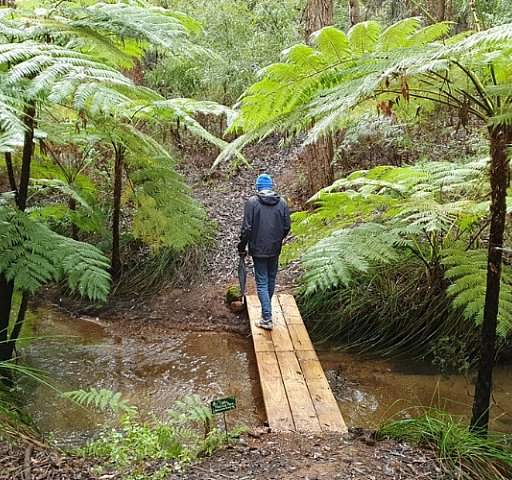
- A Goolengook stream in the heart of far East Gippsland, Victoria
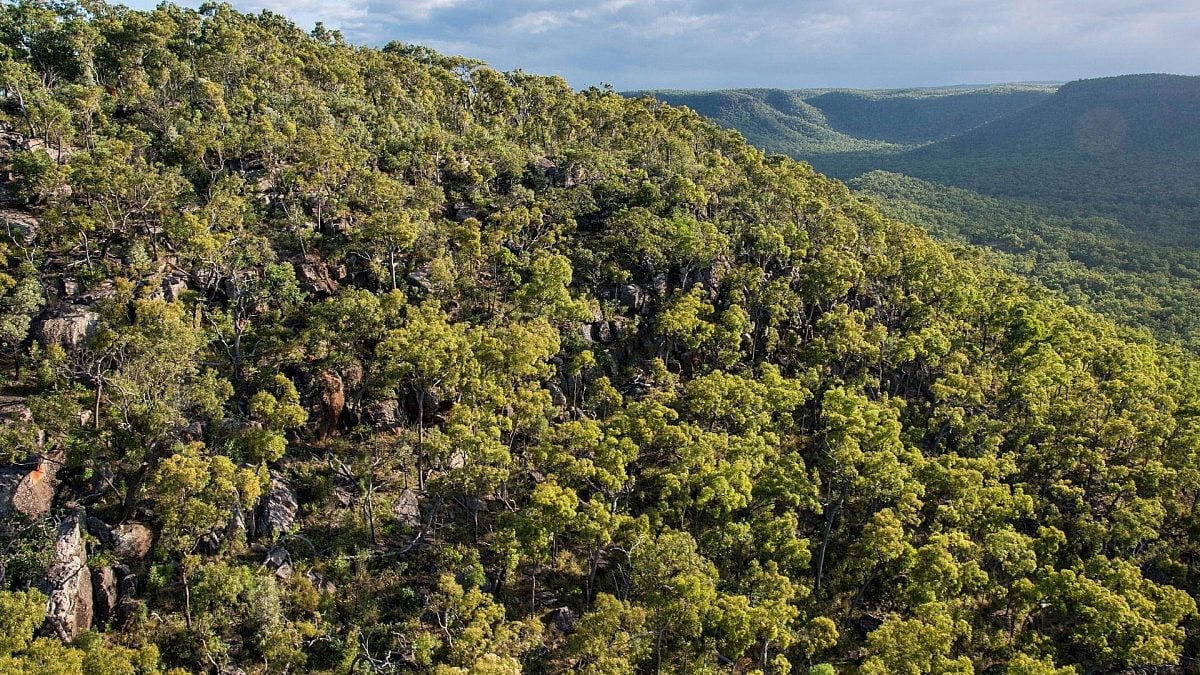
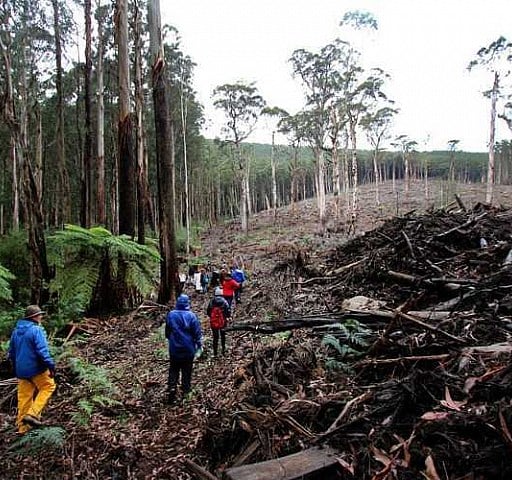
In the far south east of Australia lies Goolengook, one of the oldest and most spectacular forests to be found anywhere on earth. Some of the largest trees and flowering plants on earth, along with some of our most unique and threatened animals still survive here. Amazingly this area is not protected, and is threatened by an intense logging and woodchipping regime which will destroy Goolengook forever.
In the heart of far East Gippsland, north east of Orbost, Goolengook has become a forest icon through intense media attention during the forest rescue blockades since 1997.
Regional, State and National Environment groups have campaigned for years to have the breathtaking forests of Goolengook protected as an addition to the adjacent Errinundra National Park.

- Spotted-tailed (Tiger) Quoll photo: Jeni McMillan
East Gippsland's forests form a unique biodiverse ecosystem which has evolved since Australia separated from the ancient supercontinent Gondwana some 65 million years ago.
Over 300 rare and threatened plant and animal species are found within the region's one million hectares of forest. These old growth wet forests are the preferred habitat for animals such as the Spot-tailed Quoll, Powerful Owl, Sooty Owl and the Long Footed Potoroo.
The region contains the largest contiguous areas of old growth and undisturbed forest in Victoria and is of national and international significance. In 1987, the Victorian Government first officially proposed East Gippsland for World Heritage Listing. At the time, the proposal was not supported by the Commonwealth Government, but several studies since have confirmed the region has World Heritage values.
The East Gippsland Regional Forest Agreement (RFA)
East Gippsland was the first region in Australia to have an RFA signed. This was an attempt by Federal and State governments to end the debate over the logging of native forests and to deliver jobs and job security to East Gippsland's logging industry.
Neither of these objectives have been achieved. Over the past six years, jobs in the logging industry have fallen by 60%, yet since the East Gippsland RFA was signed in 1997 woodchipping has doubled. East Gippsland is no exception.
The old growth Forests of Goolengook were one of the first areas subject to logging following the signing of the East Gippsland RFA. This was met with a high profile and long running forest rescue protest. The East Gippsland RFA has been publicly denounced by all environment groups who were involved in the process. The East Gippsland RFA has only succeeded in escalating forest conflict in the region.
The Forests of Goolengook
Goolengook encapsulates everything that is rare and breathtaking about East Gippsland.
It contains an unrivalled assemblage of flora and fauna that includes a multitude of rare, vulnerable, threatened and endangered species and plant communities. Logging will destroy these flora species and degrade habitat for animals.
Goolengook has nine plants, animals or communities listed as threatened under the Victorian Government's Flora and Fauna Guarantee Act (1988) and another nine plants listed as rare or vulnerable.
The Slender Tree Fern is nationally rare and close to extinction in Victoria. The Long-footed Potoroo, only discovered in 1980, and one of Australia's rarest mammals, will suffer from increased mortality from habitat destruction. The Spot-tailed Quoll, the largest marsupial carnivore on the mainland, and related to the Tasmanian Tiger, is threatened with extinction and will suffer from loss of habitat and increased competition.
Goolengook is also a stronghold for the threatened Powerful and Sooty owls.
Breaking the Chain of Destruction.
In the last 5 years approximately 30,000ha of East Gippsland's forests have been logged out. For almost a decade up to 1 million tonnes of East Gippsland's forests have been made available for woodchipping each year for as little as 9 cents a tonne. That is less than one dollar for a big eucalypt tree, some of which are hun-dreds of years old.
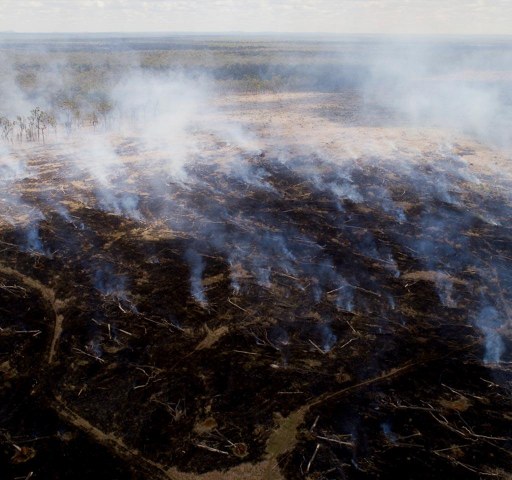
Only 5% of Australia's original old growth forests remain. If logging goes ahead in Goolengook, over 1000ha of outstanding old growth forests will be clearfelled, rainforest will be bulldozed and a number of threatened species will lose irreplaceable habitat. Nesting and roosting trees for species which can only live in an old growth forest will be destroyed.
Ancient forests are being clearfelled and turned into monoculture tree farms, destroying the biodiversity that has taken millions of years to evolve. This further heightens the significance of Goolengook, as it provides a rare opportunity to protect a number of species in one catchment. This is Victoria's Noah's Ark.
A Goolengook National Park.
Given Goolengook's biological importance and unrivaled array of natural values, we have a responsibility to pass it on intact to future generations. The proposal to extend the Errinundra National Park to include Goolengook is the only way to guarantee the protection of these remarkable old growth forests and the wide array of rare and threatened animals and plants which live there.
Environmental organisations are cam-paigning to have Goolengook added to the adjacent Errinundra National Park. The Goolengook National Park proposal seeks to protect old growth forests, endangered species habitat and a variety of rare rainforest communities.
The proposal is based on scientific recommendations made by government scientists who studied Goolengook's forests and the flora and fauna it supports. Scientists describe Goolengook as one of the most sig-nificant forests in south eastern Australia.
This is the most reasonable of demands by environment groups, protecting a tiny area of the best of East Gippsland's forests. The proposal aims to include a further 5000 hectares within the Errinundra National Park. Half of what is proposed for National Park status is already part of the reserve system, or not available for logging. The other half accounts for less than 0.3% of the East Gippsland Forest Management Area.
Who Wants to Log Goolengook?
East Gippsland Logging (EGL)
Since 1998, EGL has been the logging syndicate which undertakes logging operations in East Gippsland, under contract from the state Department of Natural Resources and Environment (DNRE).
Daishowa Paper Manufacturing
Daishowa is the driving force behind forest destruction in East Gippsland, and would be the major recipient of woodchips from that area. Daishowa established Australia's first export woodchip mill in 1967, commencing operations in 1971, exporting woodchips from East Gippsland and the New South Wales south coast.
Daishowa exports up to 800,000m3 of pulp logs annually to Japan, from their export facility at Eden on the New South Wales south coast.
In early 2001, Daishowa merged with Nippon Paper Industries to form Nippon Unipac, now Japan's largest company and the seventh largest corporate entity in the world.
Midway Forest Products
Midway is one of four woodchip mills based in Geelong. Midway have a statewide licence to extract and export 310,000 tonnes of woodchips from native forests each year. The woodchips are sent to Japan to be manufactured into paper and packaging products.
A woodchip train carries logs from Bairnsdale in Gippsland to Midways.
For more information, please contact:
The Wilderness Society Victoria Inc
288 Brunswick St
Fitzroy, Vic, 3065
Phone: 03 9038 0888