|
Updated: June 28, 2007
|
|
|
|
Campaign to save the Ludlow Tuart Forest continues
The decision
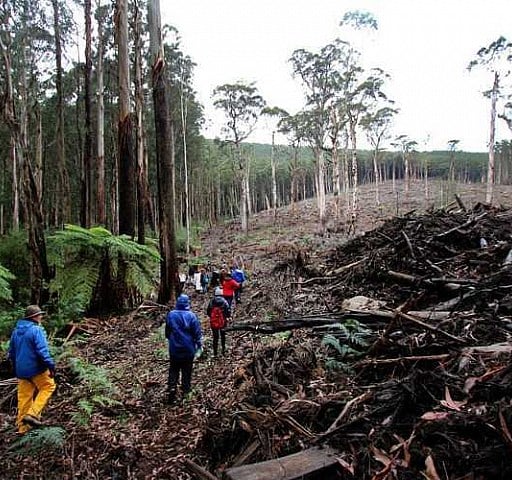
Environment Minister Dr Judy Edwards approved the proposal by Cable Sands to mine 115 hectares in the Ludlow Tuart Forest in late 2003. The decision disregards the concerns of the Conservation Commission of WA, CALM, WA Institute of Foresters, Shire of Busselton, Cape Naturaliste Tourism Association, and the Conservation Council of WA. This decision allows the destruction of 164 old growth Tuarts whose ages have been estimated between 150 and 500 years old. Mining would also see 872 mature (80 years+) and 191 immature trees destroyed. In total, the State government has approved the tearing down of 1227 trees belonging to one of the world's most unique ecosystems
What is a Tuart?
The tuart (E gomphocephala) is named so in reference to the swollen or club-like flower cap or head that is considerably broader than the tube of the calyx. Tuarts have a grey bark and non-uniform leaf shape, which is varyingly elongated and spiral-shaped.
Tuart was recorded in the 1830’s as "a most valuable timber for millrights, shipwrights and wheelrights as it is almost impossible to split the wood although it may be closely morticed. Not liable to splinter, it would be particularly suitable for ship-building in time of war." Tuarts tolerate salt in soil and produce profuse nectar- the honey of which was considered "one of the choicest honeys in the world" in 1927.
The issue
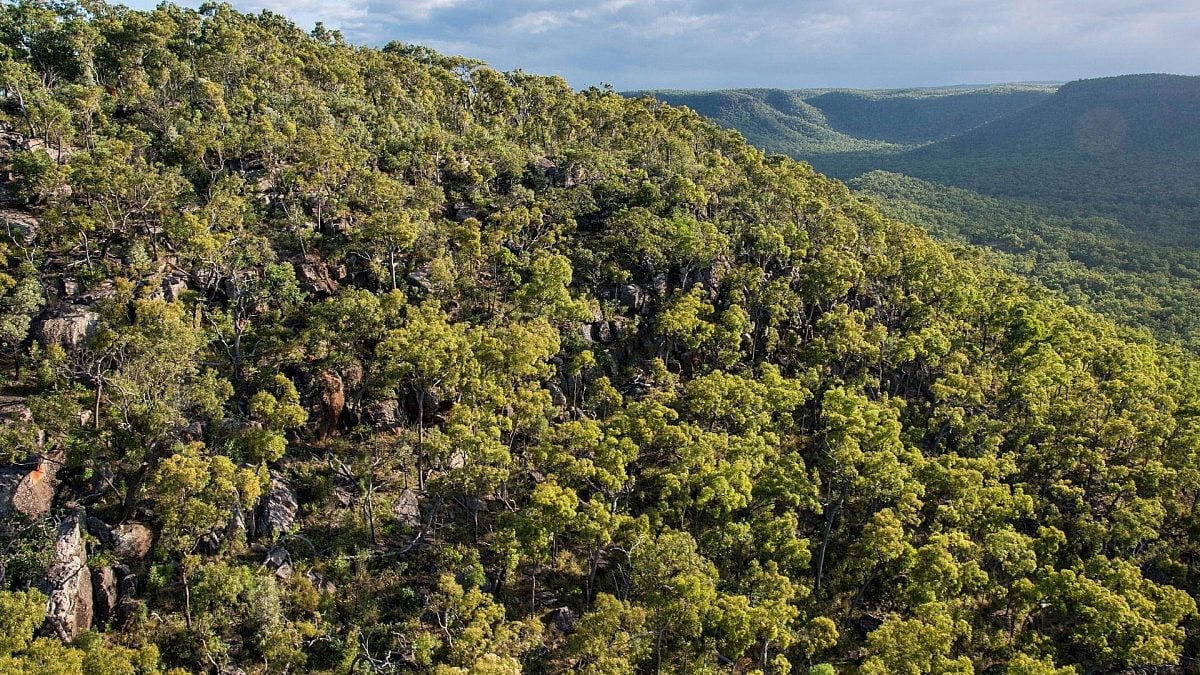
Tuarts are endemic to Western Australia and specifically the Swan Coastal Plain, occurring from Jurien Bay to Busselton. The extent of tuarts falls into six distinct tuart ecosystems, of which four are considered rare due to their limited range and size. One of these rare tuart ecosystems is the Ludlow Tall Tuart Forest: what makes this ecosystem particularly special is that tuart trees grow taller there than anywhere else in the state.
The Ludlow Tuart Forest is the only remaining Tall Tuart Forest in the world and is therefore one of the rarest ecosystems left on earth. 1955 hectares are left in the South West of Western Australia and Cable Sands have been given approval to mine 115 hectares right in the middle of it: the reason-titanium. It is not surprising that the move has attracted opposition from a variety of groups and community members.
The area is habitat for a number of rare and endangered and vulnerable species including the endangered Carnaby’s Black Cockatoo, the Chuditch, Brush-tailed Phascogale, Western Ring-tailed Possum, Brush Wallaby and contains 1739 Tuart trees and their associated eco-systems.
The EPA (Environmental Protection Authority) has admitted that any attempt to rehabilitate the area may not result in the return of it’s present values such as tall Tuart trees growing to a great 500 year old age.
In their submissions to the EPA the Conservation Commission of WA, CALM, WA Institute of Foresters, Shire of Busselton, Cape Naturaliste Tourism Association, and the Conservation Council of WA have all opposed mining in the Ludlow Tall Tuart Forest. Dr Judy Edwards has ignored their concerns. However there is still a lot more that can be done to make sure this unique area is not lost forever.
Cable Sands claims they can restore this ecosystem (post mining) to “a condition better than currently exists.” However at present there is no evidence in WA that Cable Sands is capable of restoring an ecosystem. What limited experience Cable Sands does have, has demonstrated that it is difficult to regrow tuarts on mined soils that are similar to those of the Ludlow Tall Tuart Forest. Further, the oldest tuart trees that Cable Sands have attempted to revegetate are only 15 years old and far from representing a Tall Tuart Forest.
In 1903 there were only 40500 ha of tuart forest ecosystems remaining in the South West of WA. The area was singled out for urgent conservation by the Royal Commission, after significant depletion of naturally occurring forest was cited (down some 89500 ha: from 130 000 ha in 1882 recorded in the first official survey of WA forests, to 40500 ha to 1903: a span of just 21 years) as a result of Tuarts’ attractive timber properties as a hardwood.
Recommendations made to the WA Government in 1904 stated that: “All countries seem now to realise the importance of stopping the reckless waste of the past and making provision for the future…. The longer it is delayed, the more difficult the task.”
Today, some 99 years after these findings were handed down, it appears that we are still no wiser.
Stygofauna
While Cable Sands' Environmental Review and Management Program considered the existence of stygofauna unlikely, recent surveys have discovered these unique subterranean fauna within the mining lease. Stygofauna are aquatic subterranean animals found in groundwater systems. These amazing animals display a high level of endemism, meaning that they have an extremely limited range.
As noted in EPA guidelines for the assessment of the environmental factors in consideration of subterranean fauna, Western Australian species are particularly significant scientifically in terms of conservation because they appear to be relics from the time of Gondwana.
Indigenous history
The tall tuart forest of Ludlow is part of the tribal lands of the Wardandi people and is an area of special significance to their culture. As a relatively open forest with a scattered understorey, the area was easy to move through and the ideal location for large camps and tribal gatherings. The French witnessed this in 1801 when they visited the area and noted the Ludlow forest as a massive tribal council ground, where the governing of their people took place.
Bill Webb has described the scene one would have seen at such large gatherings as numerous camps spread throughout the forest with the campfire light reflecting off the white bark of the tuarts, in a way that lit up the area and allowed one to walk from camp to camp with ease.
Before European settlement the tuart forest would have been dominated by many more large tuarts as pictured above, and it is not difficult to imagine the significance of the area and the atmosphere it provided. It is thus not surprising that this area was used by the Wardandi people as a gathering point for tribal meetings with other people of the Bibbulman Nation such as the Koreng, Wilmen, Minang, Balla Ding and Piblemen. When such meetings took place the different tribes camped around a common elders circle with each tribe located around this circle like points of a compass, pointing the direction of their tribal lands.
After European settlement things began to change, with settlers seeing the value of the forest for the wood it provided and as land to be used for agriculture and in 1829 the clash of cultures led to the beginning of individual killings. In 1841 George Layman was speared by Gaywer at Wonnerup House when he refused to release Bill Webb's Grandmother. This was to be the spark for the Wonnerup Massacre during which white settlers rode abreast through the tuart forest killing over 250 people on their tribal land. Tribal elder Bill Webb has said that the events of the past were bad enough and to allow mining would be to desecrate the spirits of his ancestors for a second time, which must not be allowed! The Ludlow tuart forest is the resting ground for many of those killed in this massacre and their spirits should be allowed eternal peace.
William Hayward a young member of the Wardandi People, has also recounted the events of the past and with great passion the value of this area to his people. To hear William speak is to know that the Ludlow Tall Tuart Forest is still close to the heart of the Wardandi people and to understand that it would be criminal to allow mining in this unique ecosystem.
What you can do
- Contact the Director of BeMaX Resources NL
Mr Antoine Shirfan
Director
BeMaX Resources NL
10 Market St
BRISBANE 4000 - Take part in a cyberaction! Click on the link on our WA page.
- Contact the Minister for the Environment on (08) 9220 5050
Dr Judy Edwards
29th Floor 77 St Georges Terrace
Perth, WA, 6000 - Contact the Premier on (08) 9222 9888, wa-government@dpc.wa.gov.au
- Come along to a Wilderness Action Group (WAG) meeting, on Tuesdays at 5.30pm at City West Lotteries House.
- Come to a Save the Tuarts Action Group meeting, Thursdays at 6pm at 195b Pier Street Perth.
As Botanist James Drummond noted in 1843, after passing through Tuart forest north of Busselton; “Few of the natural productions of a country can be of more importance than the indigenous forest trees.” With the threat of further tuart decline, since, (and as suggested in) 1904, it is important that we protect what remains from further clearing and environmental stresses.
Contacts
For futher information contact
Friends of the Tuart Forest
PO Box 291
Busselton 6280
Ph/fax: 9754 2049
or
Cassidy Newland
Forest Campaign Coordinator
The Wilderness Society
(08) 9420 7255
Written and edited by Phoebe Coyne, Sophia Stafford, Zoe Moore and Cassidy Newland
This Campaign is being coordinated by the Friends of the Tuart Forest in conjunction with The Wilderness Society, Busselton-Dunsborough Environment Centre and Save the Tuarts Action Group.
For more information, please contact:
The Wilderness Society WA Inc
City West Lotteries House
2 Delhi St
West Perth, WA, 6005
Phone: 08 9420 7255